Specialty Films / Thermal Management

Thermally Conductive Polyimide Film

A thin, flexible interface for heat transfer and electrical isolation.

  • Thermal Transfer
  • Electrical Insulation
  • Precision Converting
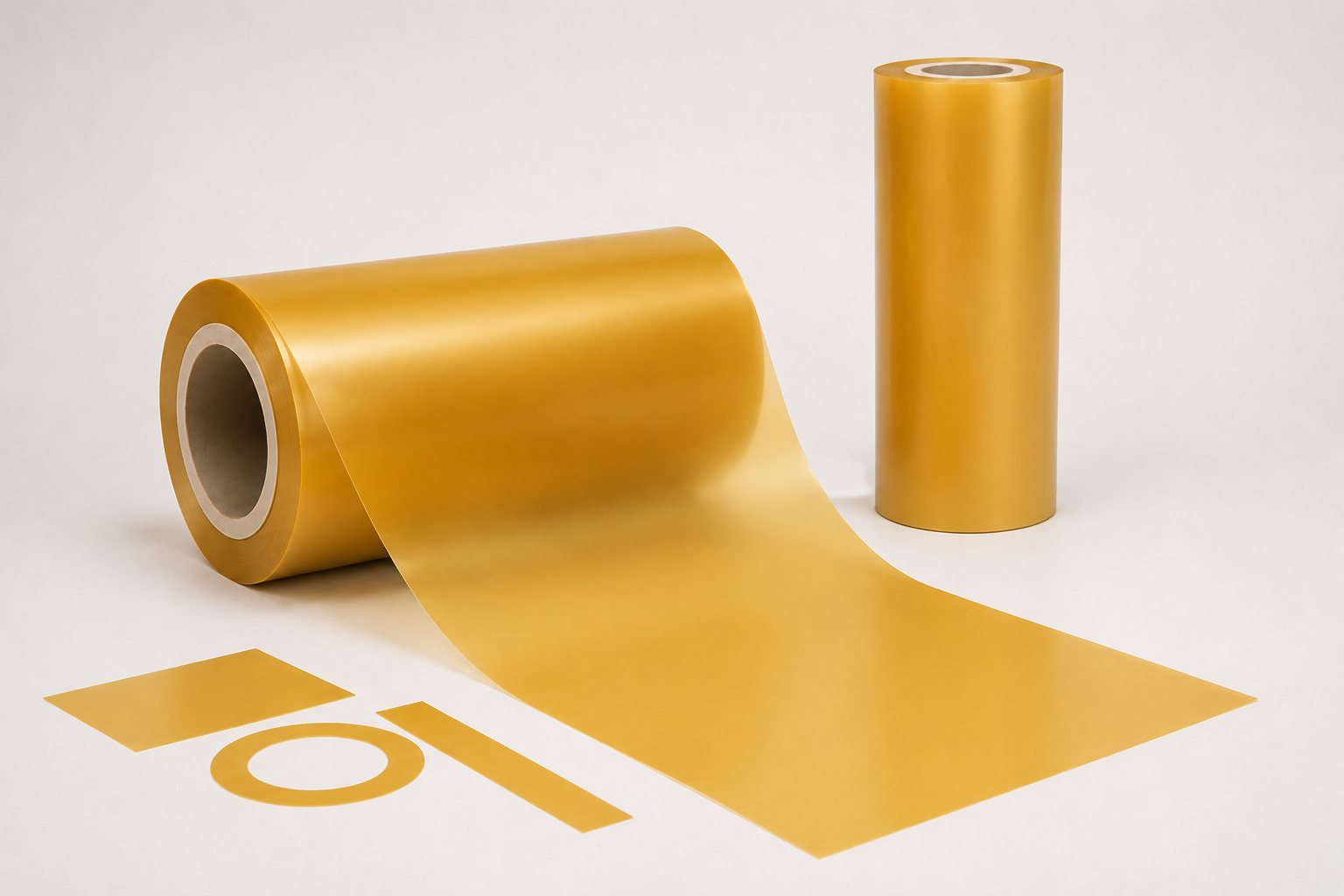
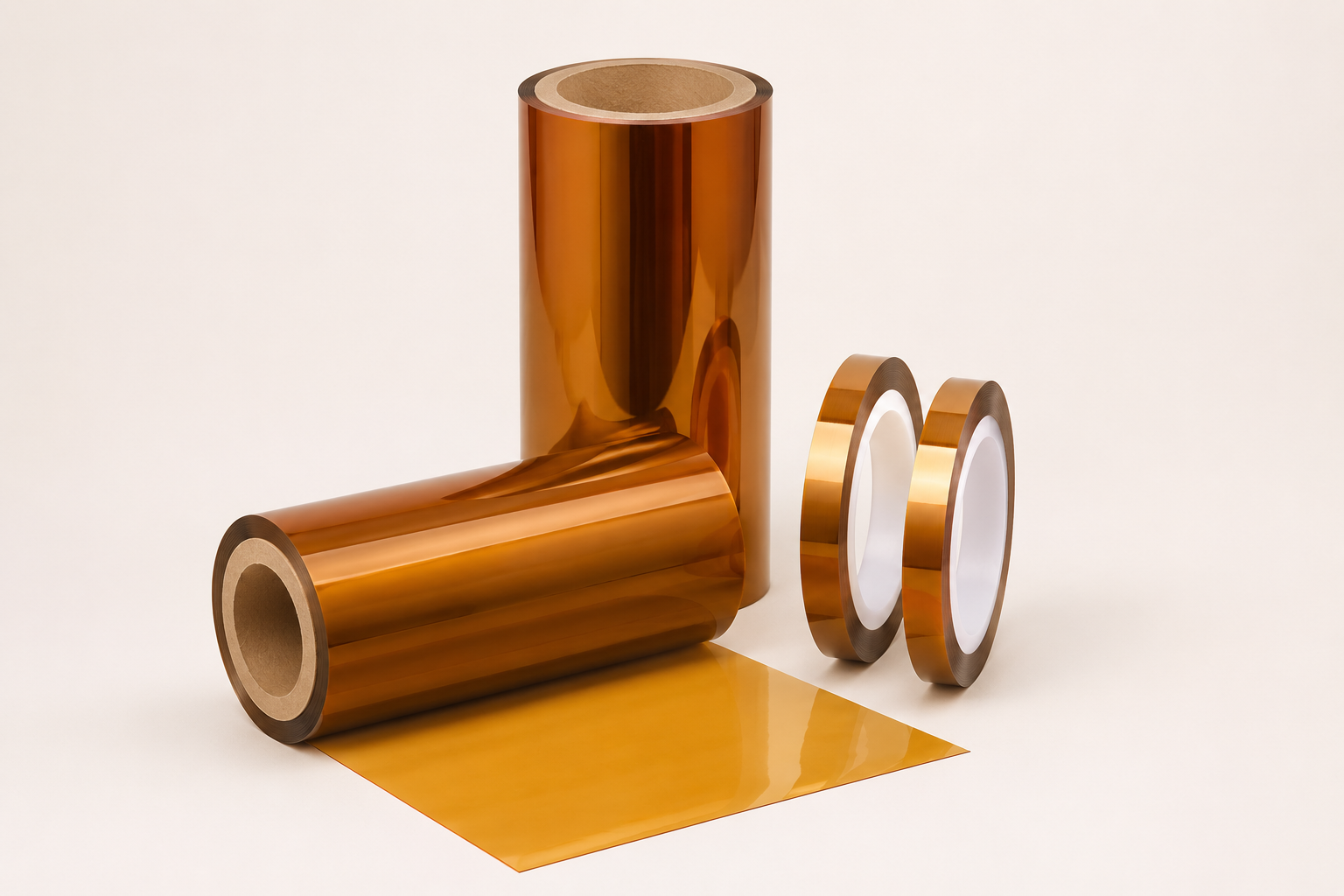
Thermally conductive polyimide film in roll, sheet and converted formats

One Material · Two Functions

Move heat. Keep electrical separation.

Heat-Generating ComponentHeat source
Thermally Conductive Polyimide FilmThermal transfer + electrical isolation
Metal Heat SinkHeat dissipation
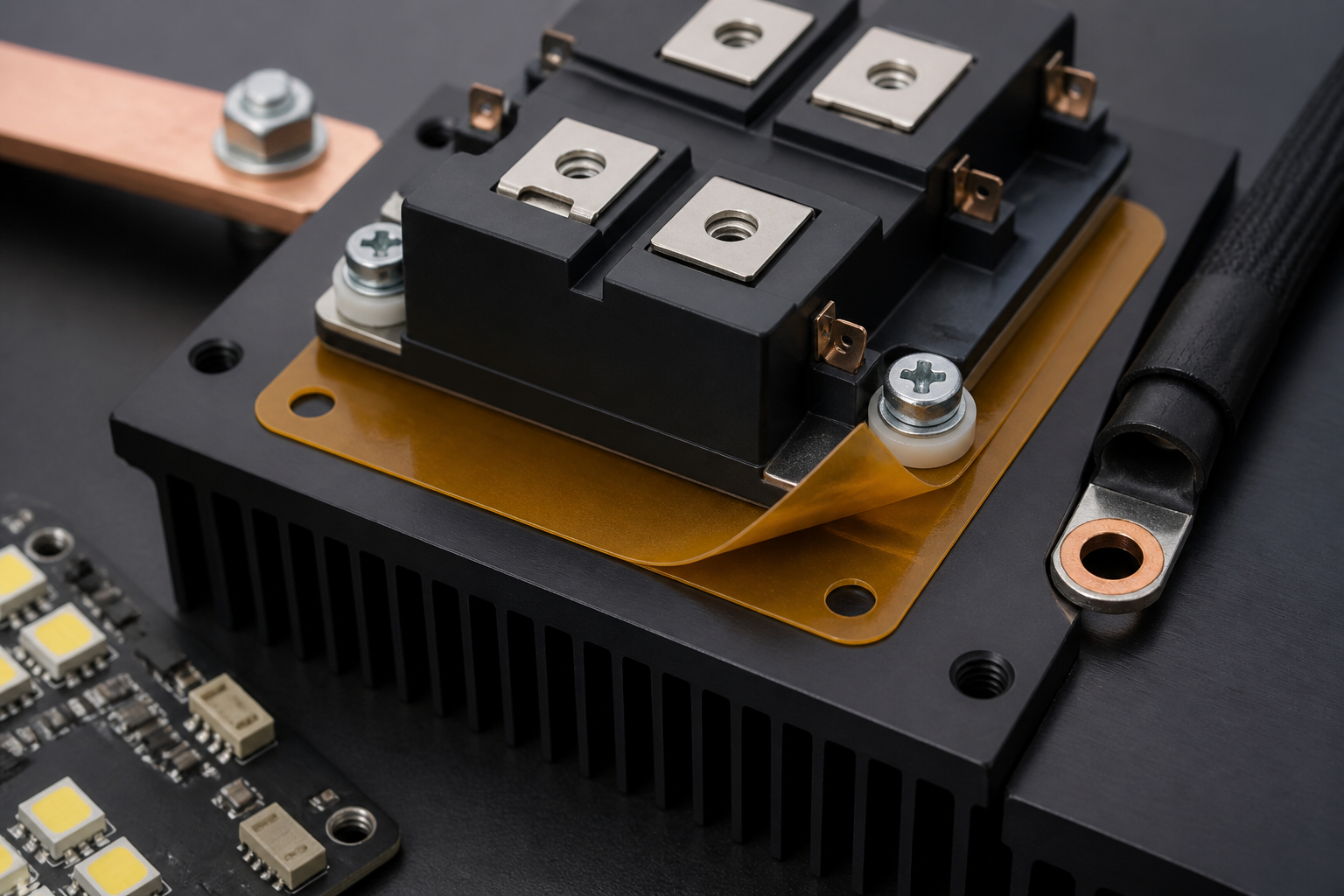
Application visualization of a power module over polyimide film and a metal heat sink
[REAL CONTENT REQUIRED] Confirmed application photograph

Where the Film Works

A functional layer inside the assembly.

The film is placed between a heat-generating component and a metal heat-dissipation structure. Final performance depends on the selected film, interface condition and complete assembly design.

01Power Module
02Thermally Conductive Polyimide Film
03Heat Sink

Application Focus

Designed around the assembly.

Power Modules

Interface insulation

LED Assemblies

Compact thermal paths

Battery Systems

Insulation and heat control

Electrical Components

Flexible thermal insulation

Available Forms

Supplied for the way you use it.

Final format is aligned with the converting process and assembly requirements.

Rolls
Sheets
Die-cut Parts

What We Confirm

Four inputs shape the material direction.

  1. 01ApplicationWhere the film is used
  2. 02Operating ConditionsHeat · voltage · pressure
  3. 03Material ConstructionThickness · surface · format
  4. 04Application ValidationConfirm in the actual assembly

Technical Data on Request

Data for the selected grade.

Technical values depend on the selected grade, thickness and construction. The relevant technical data can be provided after the application requirements are confirmed.

Request Technical Data
  • 01Thermal Properties
  • 02Electrical Properties
  • 03Mechanical Properties
  • 04Dimensional Stability
  • 05Surface and Appearance

Related Applications

Connect the film with its working conditions.

Your Application Comes First

Start with the application—not a generic data table.

Share the intended use, operating conditions, required format and key concerns. We can discuss the suitable material direction and provide the relevant technical document.