Thermal process stability
The polyimide carrier and silicone adhesive system is intended to maintain a controlled interface during demanding, time-limited heat exposure.

ATR-PIS SERIES · SINGLE-COATED TAPE
Amber polyimide film and heat-resistant silicone pressure-sensitive adhesive, combined for controlled masking, electrical insulation and precision converting.
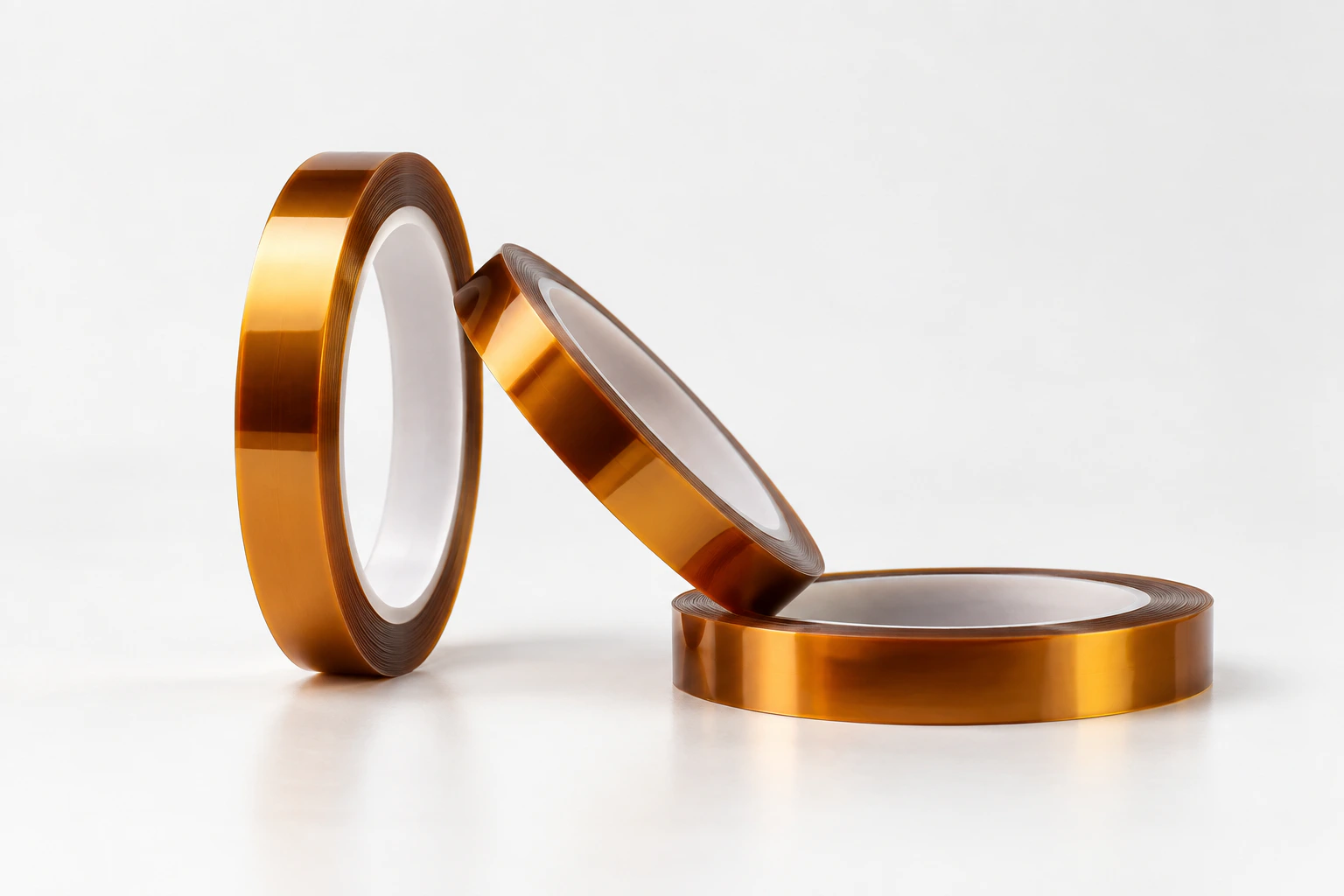
01 · THE MATERIAL SYSTEM
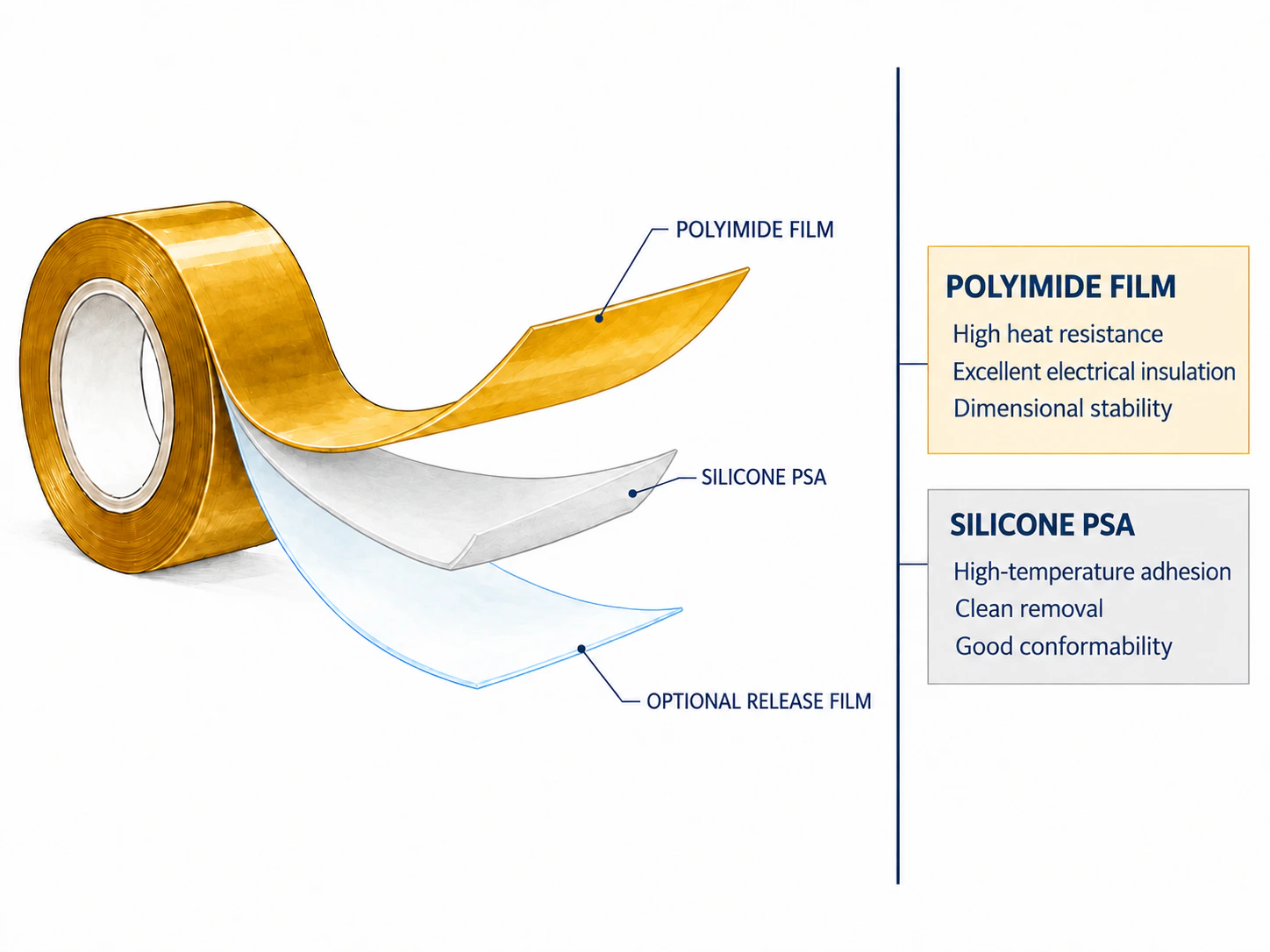
ATR-PIS is a single-sided tape constructed with an amber polyimide film carrier and a heat-resistant silicone pressure-sensitive adhesive.
The film provides the dielectric, mechanical and dimensional support. The adhesive brings that support into close, conformable contact with the selected surface during processing or service. Suitability and removability are therefore evaluated as a complete construction—not as isolated material claims.
02 · PERFORMANCE IN CONTEXT
The polyimide carrier and silicone adhesive system is intended to maintain a controlled interface during demanding, time-limited heat exposure.
A thin polyimide barrier supports local insulation while adding limited bulk to compact electrical and electronic assemblies.
The single-coated construction follows edges, curves and compact features where a rigid insulating part would be difficult to place.
Stable film construction supports narrow slitting, laminating and die-cut parts for repeatable handling and placement.
Removal behaviour depends on the substrate, surface condition, dwell time, peak temperature and cooling method; it is never assumed universally.
03 · CONFIRMED APPLICATION DIRECTIONS
These images identify representative placement tasks from the supplied product documentation. They do not prescribe a universal customer construction.
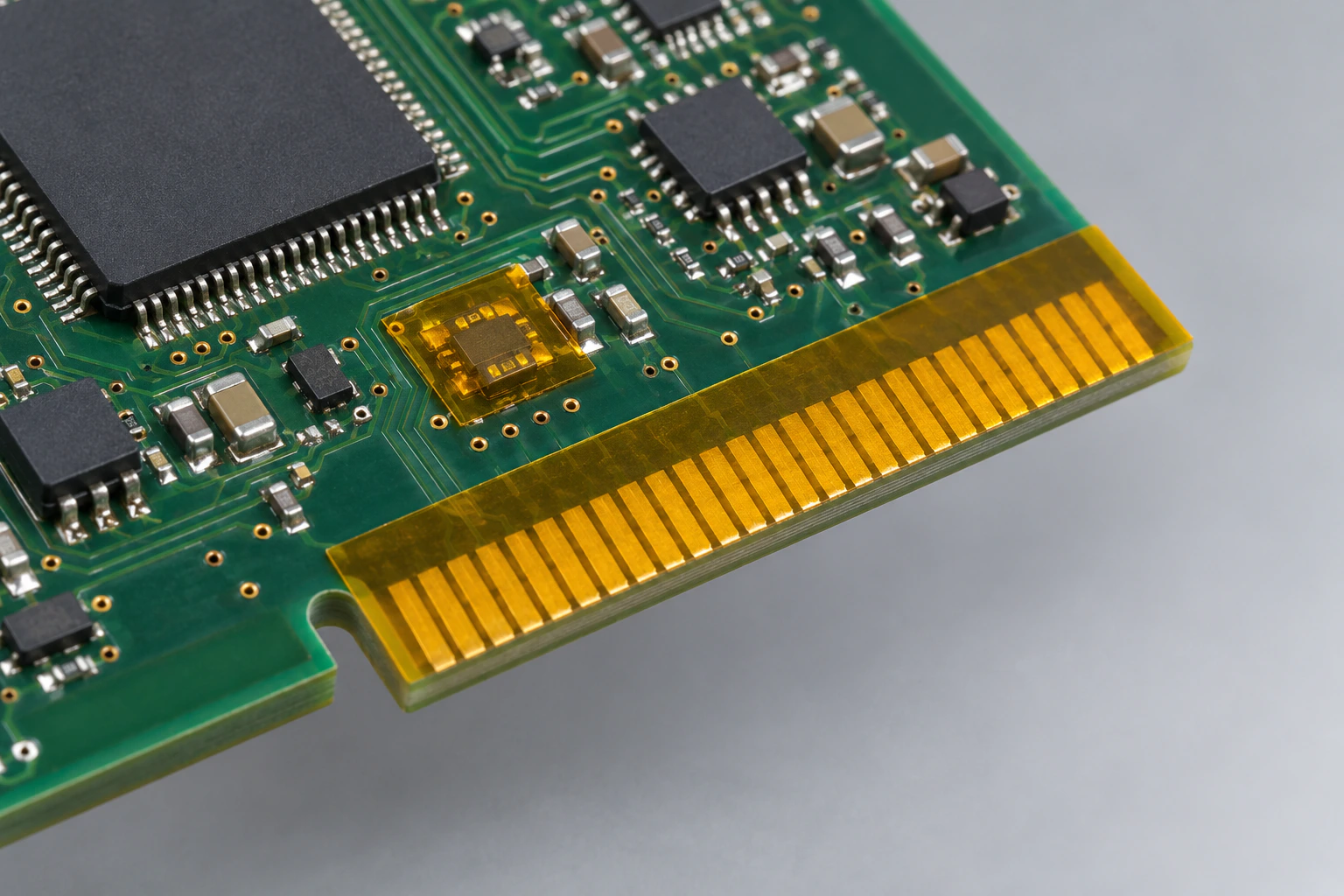
Defines selected contact and component areas during wave-solder, reflow or solder-dip operations. The board finish, temperature profile, dwell time and removal condition must be verified together.
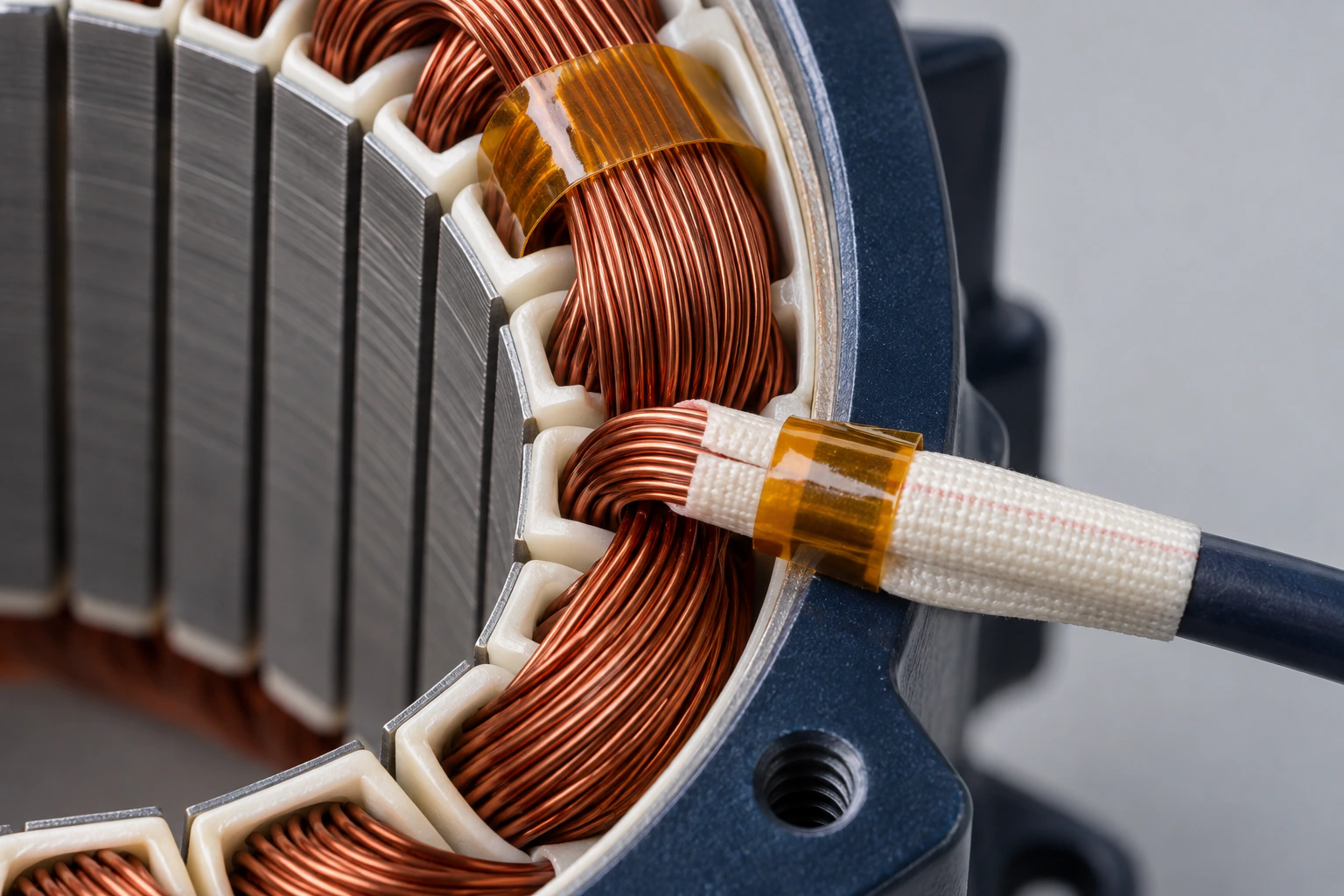
Provides a thin local insulating and securing interface at selected winding or lead areas. Placement and electrical duty remain specific to the approved motor construction.
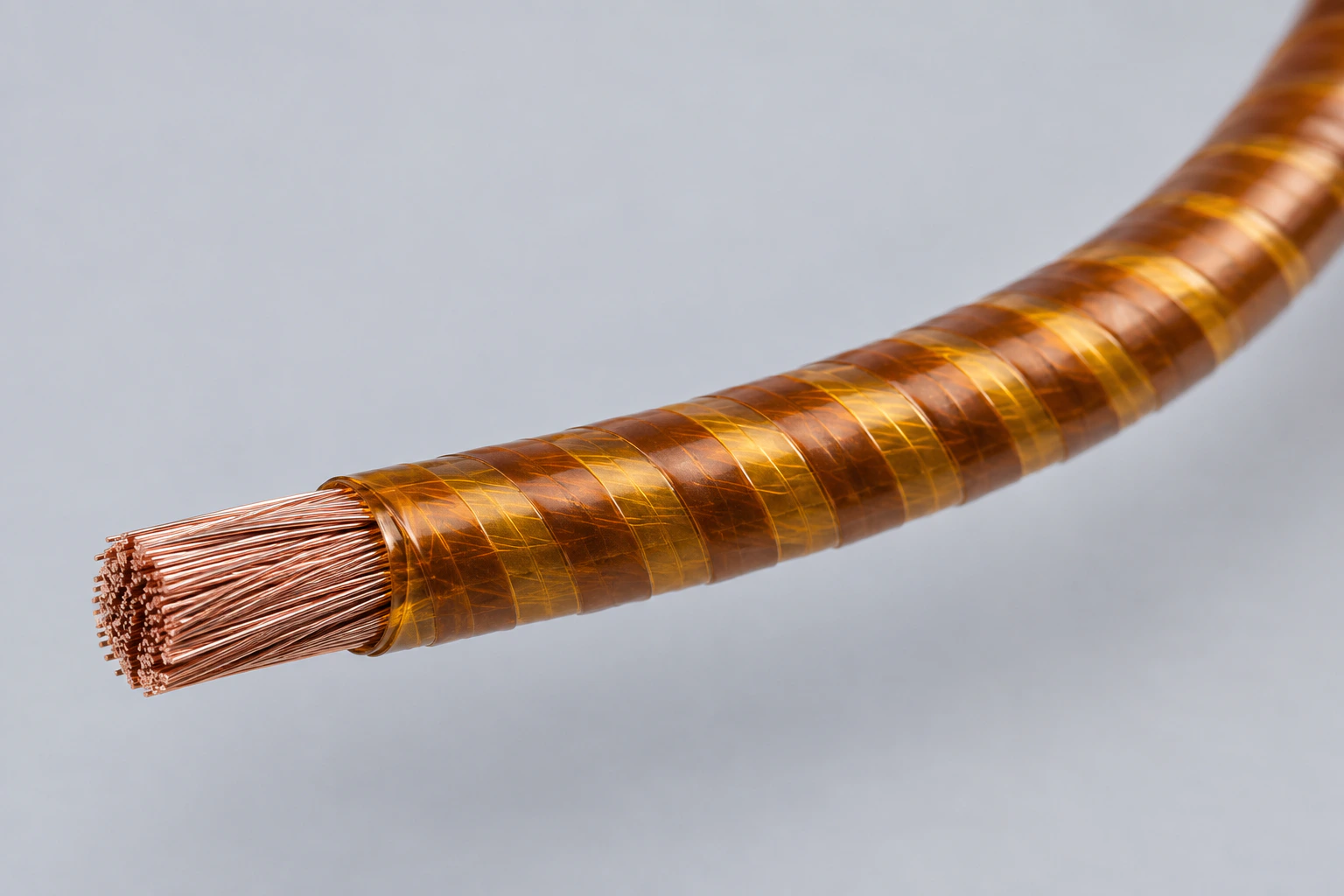
Combines a thin dielectric carrier with conformable adhesive contact around bundled conductors. Wrap pitch, overlap and final electrical performance require application validation.
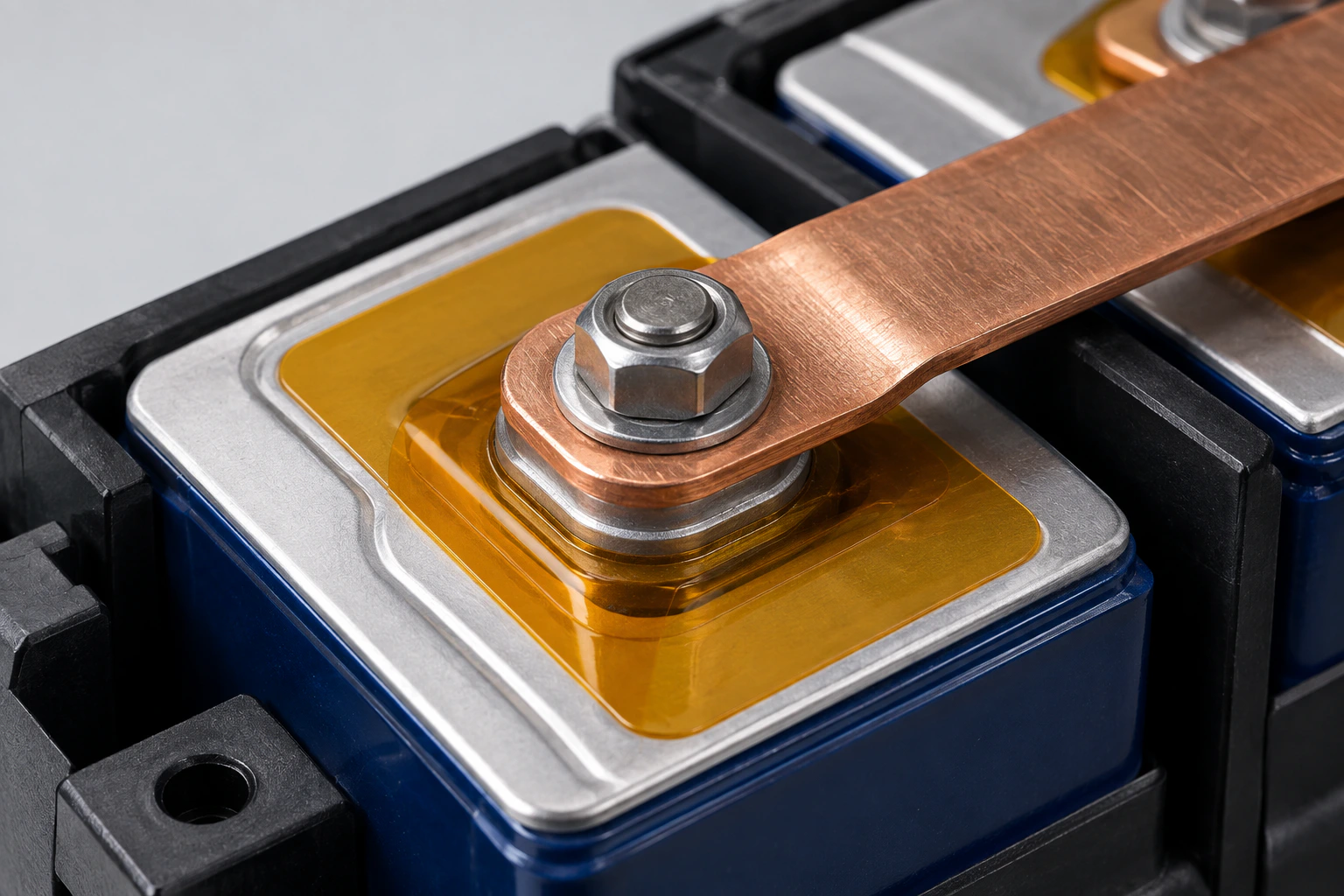
Creates a precisely placed insulating barrier around a tab or terminal interface. Cell chemistry, geometry, edge stress and the complete pack design must be reviewed before approval.
Final suitability, removal behaviour and residue performance must be validated on the actual substrate and intended time–temperature profile.
04 · TAPE CONSTRUCTION
The primary construction is polyimide film plus silicone pressure-sensitive adhesive. A PET film or siliconised-paper release liner can be supplied on request for kiss-cut parts, die-cut parts, laminating or automated dispensing.
Illustration is enlarged for identification and does not represent actual layer-thickness ratio.
05 · SELECTION CONTEXT
Material, finish, cleanliness and surface energy
Peak temperature, dwell time and repeated exposure
Flat face, edge, curve, lead, winding or converted shape
Mask, insulate, secure, protect or position
Remain in the assembly or remove after cooling
Width, length, core, liner, die-cut geometry and packing
06 · SUPPLY & CONVERTING
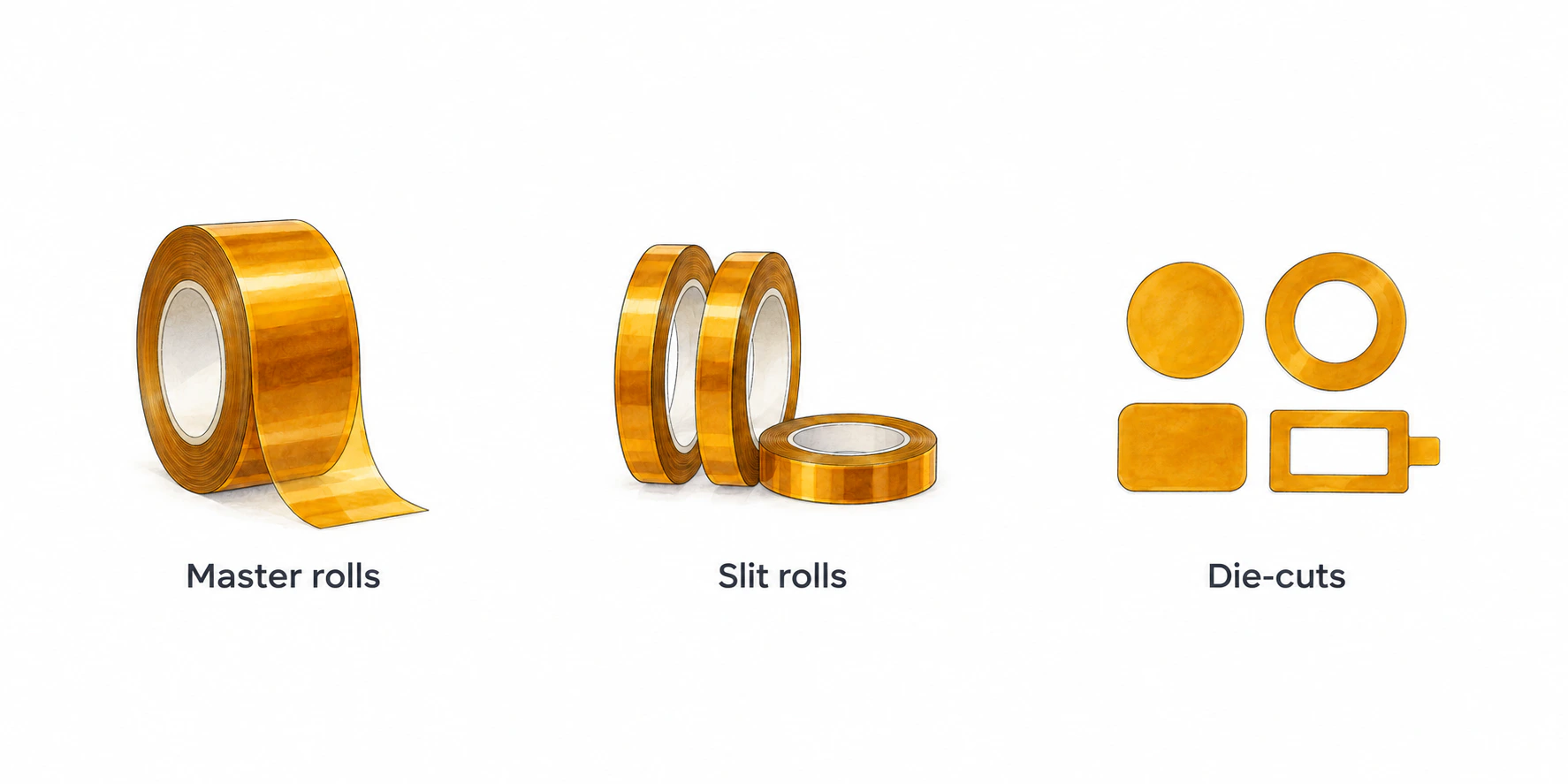
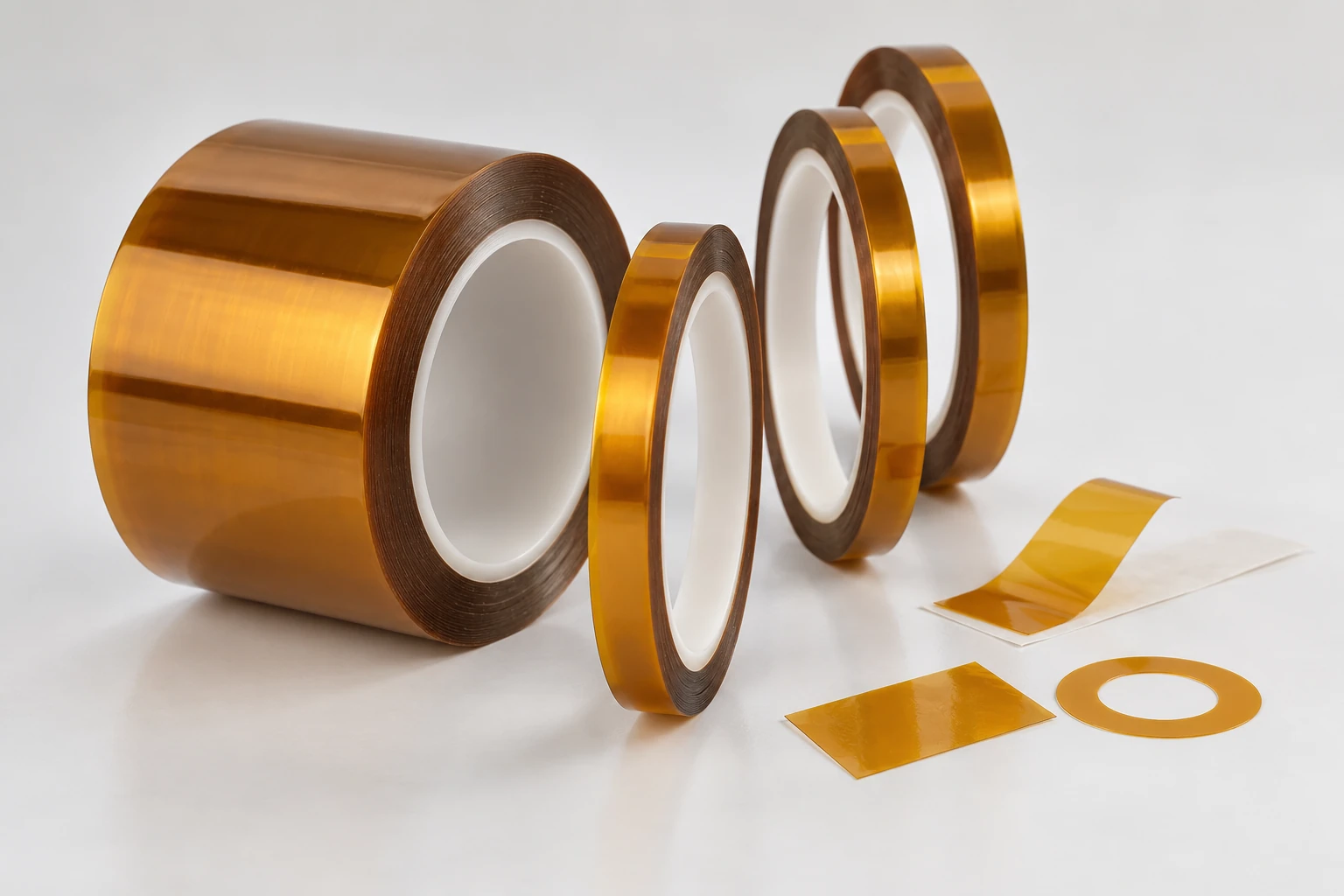
ATR-PIS can be supplied as production-width rolls, controlled slit rolls or converted parts. Final width, length, core, liner and packaging are confirmed against handling and process needs.
07 · INDUSTRY PATHWAYS
Thin local insulation and securing at selected winding or lead regions in the approved motor or transformer construction.
Explore application →02Conformable insulation and local wrapping around conductors or leads, with overlap and electrical duty validated.
Explore application →03Selected PCB solder-masking and converted process-protection tasks within the confirmed time–temperature and removal profile.
Explore application →04Local battery-tab and terminal insulation, with geometry, edge stress and chemical compatibility reviewed.
Explore application →OTHER ATERANE PRODUCTS
 ATR-PIA Series
Polyimide film tape with heat-resistant acrylic pressure-sensitive adhesive for electrical insulation, securing and precision converting.
View product →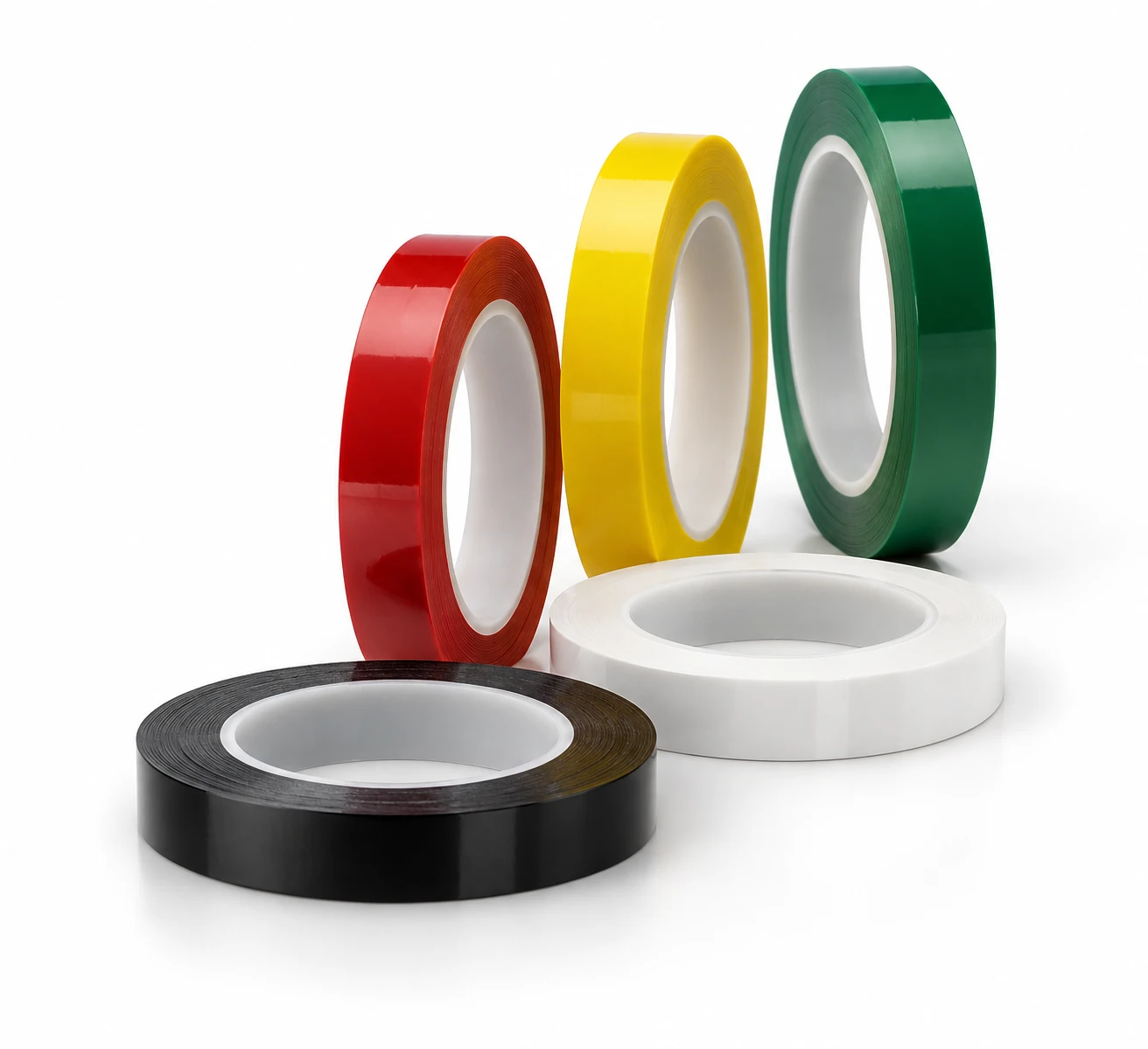 ATR-PET-S Series
PET film tape with heat-resistant silicone pressure-sensitive adhesive for temporary process masking and surface protection.
View product →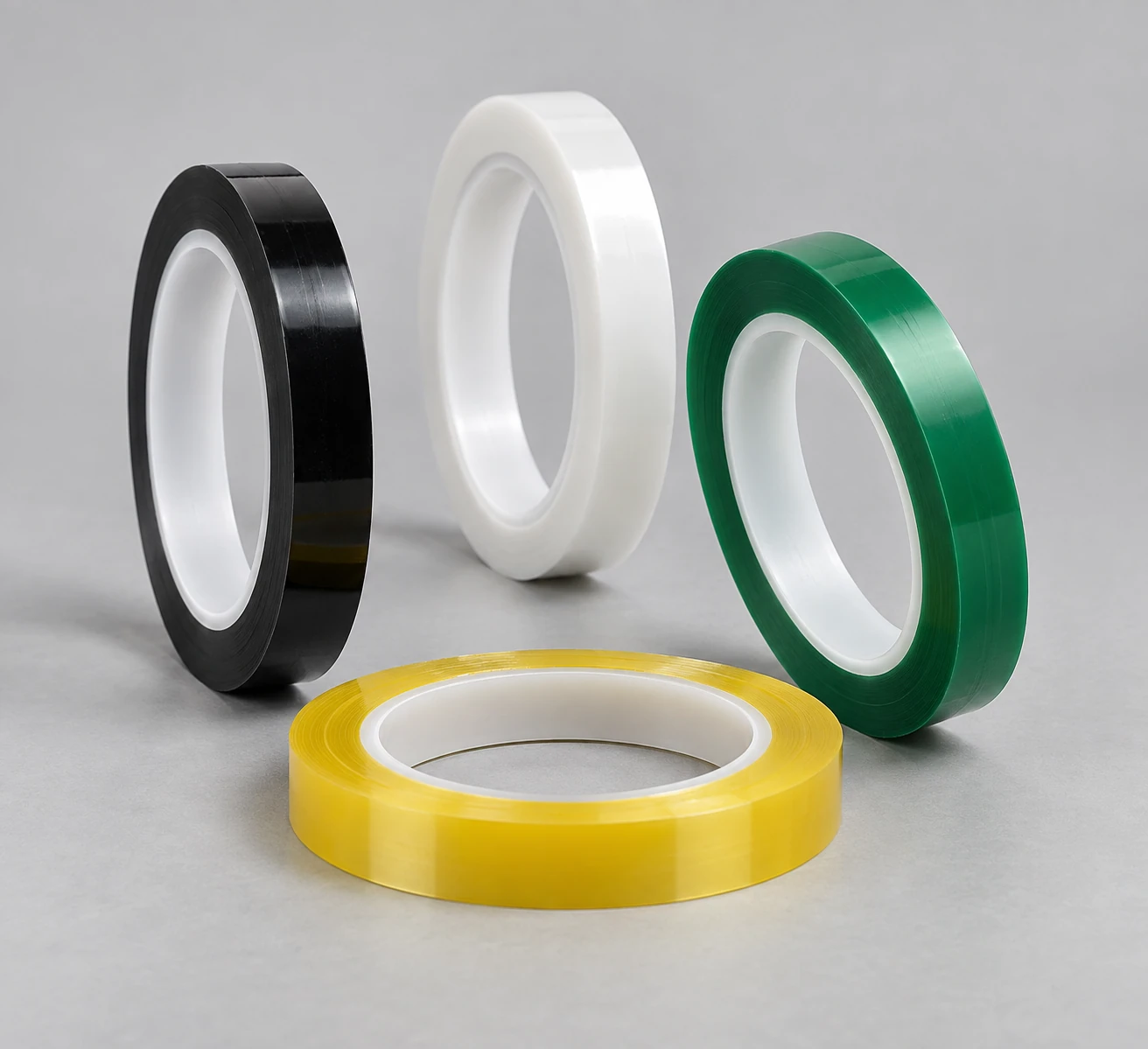 ATR-PET Series
Colored PET electrical tape with acrylic pressure-sensitive adhesive for securing, insulation and identification.
View product →APPLICATION REVIEW
Share the substrate, temperature and time, geometry, adhesion requirement, removal expectation and preferred roll or converted format. The relevant technical data will be provided after we confirm the product and application context.